Overview
AI-CDSS runs a closed adaptive loop. The clinic measures patient status, the CDSS selects protocols, monitors how the patient responds, optimizes the patient model, and individualizes the plan. Then protocol-effectiveness feedback returns to the clinic.
Hover a step to focus it; click to jump to the section that describes it.
The four numbered stages:
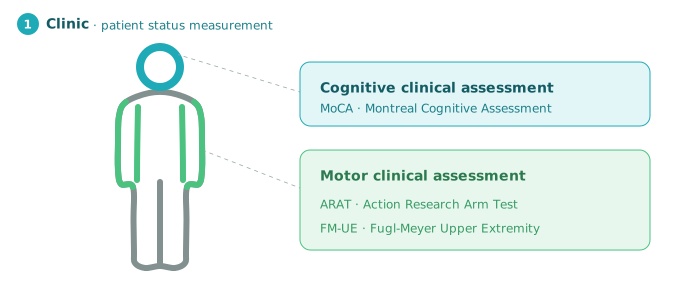
1 · Clinic: patient status
Clinical assessment defines the patient's deficit profile: MoCA (cognitive) and ARAT / Fugl-Meyer (upper-extremity motor) subscales. These become the patient deficit vector that drives PPF.
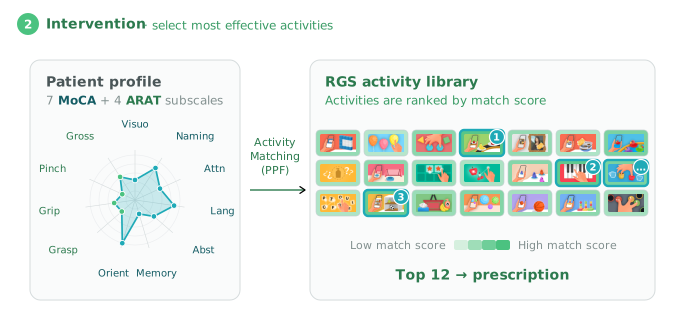
2 · Intervention: protocol matching
The patient's subscales are matched against the 27 RGS protocols. The top candidates are ranked, and the top-12 form the prescription. This is the scoring pipeline plus recommender.
3 · Optimize: supervisor model
Each protocol is tracked over time: difficulty modulation (DM) by week and adherence by weekday. A fitted slope per protocol gives ΔDM and Δadherence, which feed the score and update the patient model.
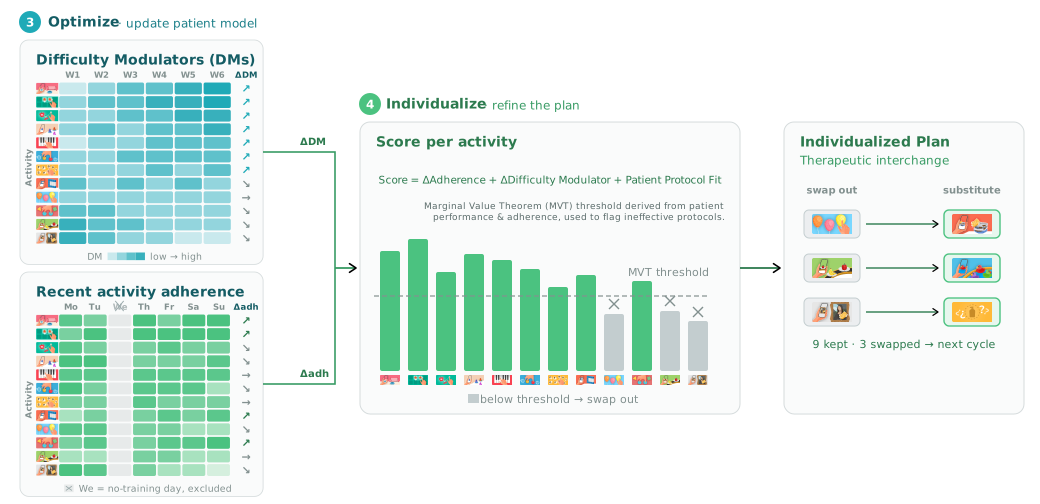
4 · Individualize: MVT swap
Protocols are ranked by score. Those below the cohort-wide MVT threshold are swapped out and replaced by similar substitutes (therapeutic interchange), producing the adjusted prescription, shown in the right half of the figure above.